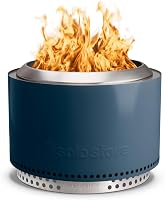
Solo Stove vs Breeo: Which Smokeless Fire Pit Wins? (October 2026)
In Solo Stove vs Breeo, choose Solo Stove for easier moving and ash removal, or Breeo for a backyard cooking setup. Pick the Bonfire for trips, the Basecamp for regular group fires, or the Breeo X Series 24 Corten for compatible cooking accessories.
On this page (9 sections)
- Solo Stove vs Breeo: what actually changes your choice?
- Which fire pit suits your space and group?
- Is Breeo better if you want to cook?
- Which design reduces smoke more effectively?
- How should you set up either fire pit?
- Can you use Solo Stove or Breeo on a deck?
- Which is easier to clean and care for?
- What mistakes should you avoid before buying?
- Which should you buy: Solo Stove or Breeo?
Solo Stove wins for easier carrying and ash removal; Breeo wins for buyers planning a backyard cooking setup. The useful question in Solo Stove vs Breeo is how you'll use the fire pit, rather than which brand has the stronger name.
Choose the Bonfire if the pit will travel, the Basecamp if friends regularly gather around a backyard fire, or the Breeo X Series 24 Corten if compatible cooking accessories are central to your plans.
All 3 burn wood and use airflow to reduce smoke. None removes the need to store dry fuel, tend a fire or deal with hot embers afterward.


Solo Stove vs Breeo: what actually changes your choice?
Moving, cooking and cleanup are the biggest differences for most buyers. Start with the job you need the fire pit to do, then choose the model that makes that job easier.
The Bonfire weighs 21.7 lb, the Basecamp weighs 30.5 lb, and the Breeo weighs 62 lb. That gap matters every time you carry a cooled pit from storage, load it into a vehicle or move it before yard work.
Both Solo Stove models include a stand, removable ash pan and base plate. Breeo's main draw here is compatibility with its live-fire cooking accessories, which suits buyers who want the fire to become part of meal preparation.
Material is another clear difference: the Solo Stove options use stainless steel, while this Breeo uses Corten steel. Choose the finish you want to maintain, but don't let appearance overrule a poor fit for your carrying route or available space.
There isn't enough information here to rank heat output or declare one brand cleaner-burning in the same conditions. Buy around the practical differences you can use, rather than assuming a heavier body means more useful warmth.
Which fire pit suits your space and group?
Choose a pit that leaves room for chairs, safe clearances and a clear walking path. Its metal body is only one part of the space a wood fire needs.
Measure the intended location before choosing a model. Include room to add wood without reaching over guests, and keep the route back to the house clear.
A large pit in a tight seating area can push chairs toward nearby furniture or plants. A smaller pit can be a better fit even when you have room to store a larger one.
For a broader look at fuel and placement choices, use our guide to choosing a fire pit by fuel, size and material. Settle those basics before building a seating area around either brand.
When does Solo Stove Bonfire make more sense than Breeo?
The Bonfire suits camping trips and shared outdoor spaces where the pit needs to move after use. Its 19.5 in diameter also makes it easier to find storage room than for the larger Basecamp.
Solo Stove describes the Bonfire as suitable for 4–6 people. Treat that as a starting point for a chair layout, since seating comfort also depends on clearance and how close people want to sit.
Skip it if your main goal is a larger fire area for regular group gatherings. Also check the shape of your cargo space: a lighter round pit can still be awkward beside camping gear.
For other models within the brand, see Ranger, Bonfire and Yukon sizes explained.
When is the Basecamp the better backyard choice?
The Basecamp suits a regular small-group fire spot where you want more room than the Bonfire offers. It measures 24.6 in across and 17.8 in high, and Solo Stove sizes it for 5–7 people.
Choose it if most fires happen at home and carrying the pit is an occasional task. It gives you the larger Solo Stove option in this comparison without the Breeo's carrying burden.
Skip it if narrow storage, frequent car trips or solo carrying are your main concerns. Extra diameter is useful around the fire but remains extra bulk after the evening ends.
When should you choose the Breeo?
The Breeo suits a planned backyard cooking area where it can stay in a suitable spot between uses. Its cooking accessory compatibility gives you a clear reason to accept the heavier body.
Check the exact footprint before ordering because the provided dimensions and model identifiers conflict. Don't size a tight patio layout or fitted surround from the model name alone.
Skip it if you'll carry the pit out for every fire or pack it for frequent trips. If you only want flames and conversation, its cooking compatibility may offer little benefit to you.
Is Breeo better if you want to cook?
Breeo is the clearer choice when cooking is part of the purchase plan. The X Series 24 Corten works with Breeo live-fire cooking accessories, so you can build the setup around the food you intend to prepare.
Decide on the meals before choosing accessories. Roasting food over a fire and preparing a full meal on a cooking surface place different demands on access, fuel management and timing.
Confirm compatibility for each accessory, and check what comes with it. Don't assume a fire pit purchase includes the cooking parts shown in a styled outdoor setup.
Leave a nearby work area for utensils and food, positioned away from the hot body and walking route. Plan where hot cooking equipment will go after use so cleanup doesn't become a scramble.
Solo Stove also describes the Bonfire as usable for food, but that alone doesn't define a full cooking system. Our guide to cooking on a smokeless fire pit explains the choices to consider before making dinner over one.
Skip a wood-burning cooking setup if you want an instant start and tightly controlled meal timing. Building a suitable fire and letting it settle are part of the process.
Which design reduces smoke more effectively?
Both designs depend on a hot fire and clear airflow to reduce smoke. Fuel condition and fire-building habits matter with either brand, so there is no supported smoke-reduction winner here.
Solo Stove uses its 360° Airflow design to bring air into the fire and through the double wall. Heated air reaches the upper fire area to support a secondary burn of particles that would otherwise escape as smoke.
Breeo combines X Airflow with double-wall construction and secondary combustion holes. These features also feed the fire and support a cleaner burn.
Expect some smoke while a fire gets established, when you add fuel or when the wood struggles to burn. The word “smokeless” describes the design goal, not every moment of a wood fire.
For the underlying process, read how a smokeless fire pit works. Understanding secondary combustion makes it easier to spot why a fire is smoldering.
Use dry, split firewood that fits within the burn chamber. Solo Stove recommends hardwoods such as oak, maple, birch and hickory for the Basecamp; that model accepts firewood logs only, not pellets or the Pellet Adapter.
Don't pack the chamber tightly or stack fuel above the intended burn area. Leave air space between pieces, and add wood in manageable amounts so fresh fuel can catch.
If smoke persists, work through the common causes of a smoky Solo Stove. Changing brands won't solve wet fuel or blocked airflow.
How should you set up either fire pit?
Choose a stable, permitted location before bringing out fuel. A good setup gives the fire room to burn and lets you manage it without moving hot equipment.
Check local burning rules and any restrictions for your property or campsite. Use the clearances in the instructions for your exact model rather than guessing from how small the flames look at startup.
Look above the pit as well as around it. Branches, roof overhangs and covered outdoor areas can make an otherwise roomy location unsuitable.
Keep the lower air openings clear of grass, loose debris and objects stored beside the pit. Don't tuck the body into a tight decorative enclosure unless the manufacturer approves that arrangement.
Set out dry fuel, suitable fire tools and a way to extinguish the fire according to the instructions. Keep children and pets away from the hot body, including after visible flames have gone.
Start with smaller dry pieces and build the fire gradually. Adding large logs too early can leave you with a slow, smoky start instead of the hot fire these designs need.
Can you use Solo Stove or Breeo on a deck?
An included stand helps with surface protection, but it doesn't approve every deck for a wood fire. Check both the fire pit instructions and the surface manufacturer's requirements.
The Bonfire and Basecamp include stands intended to help protect heat-sensitive surfaces. Solo Stove specifically advises Basecamp buyers to check with their deck manufacturer and add heat protection if needed.
Surface protection and spark control are separate concerns. Raising the pit doesn't stop an ember from reaching nearby furniture, dry leaves or other combustible material.
Don't transfer Solo Stove's stand guidance to the Breeo. Plan the Breeo's base and placement using its own instructions, especially if cooking equipment will extend into the surrounding area.
Read fire pit safety basics before settling on a deck location. If the required clearances or surface conditions won't work, choose another location rather than trying to squeeze the pit into place.
Which is easier to clean and care for?
Solo Stove has the clearer cleanup advantage here because both models provide removable ash components. That access is useful when emptying the pit is part of your routine after each fire.
Once everything is fully cool, remove the ash pan and base plate as directed, empty the ash and clear debris from the air openings. Refit the parts correctly before starting another fire.
Don't judge ash temperature by the surface alone. Buried embers can remain hot, so use a suitable metal ash container and keep it away from combustible material.
For Breeo, follow its ash-removal procedure rather than assuming the Solo Stove method applies. Its heavier body also makes tipping or repositioning a less appealing routine, particularly when working alone.
Cooking adds another care task: food residue and grease need attention under the accessory's cleaning instructions. If you want minimal work after an evening fire, avoid building a cooking setup you rarely use.
Let either pit cool and dry before storage, and follow the care directions for its finish. The Ash Bonfire has a high-heat ceramic coating, while Solo Stove says the stainless Basecamp develops a golden-blue patina over time.
A color change and removable dirt call for different responses. Don't scrub aggressively simply to keep a heat-exposed surface looking new; use the approved cleaning method for that model.
What mistakes should you avoid before buying?
Avoid buying for an occasional idea instead of your normal routine. A pit that suits most evenings is more useful than one chosen for a trip or cooking project you may never take on.
Buying the largest body is a common mismatch. It can consume storage room and narrow the space between guests without solving any real problem for your usual group.
Treating portability as weight alone is another mistake. Check doorways, steps, vehicle access and where you'll set the pit while loading, then decide whether carrying it will be practical.
Don't use the Breeo's accessory range as a reason to buy unless you plan to cook. Make a short list of meals and required parts first so the feature has a clear purpose.
Finally, don't plan to pack up immediately after the last flame. A wood fire needs time for safe shutdown and cooling, which matters especially on trips or when bad weather is approaching.
Which should you buy: Solo Stove or Breeo?
Choose by the task you'll repeat most often. The best Solo Stove vs Breeo decision is the one that fits your carrying, cooking and cleanup routine.
Pick the Bonfire for frequent moves and trips. It's the strongest fit here when bringing the pit out, putting it away and loading the car are regular parts of ownership.
Pick the Breeo for a cooking-focused backyard spot. Its weight is easier to accept when the location is settled and compatible cooking accessories will get regular use.
Pick the Basecamp for regular group fires at home. It suits buyers who want a larger Solo Stove gathering setup with accessible ash removal and an included stand.
If you're still weighing brands, continue with Solo Stove vs Tiki. The fire pit buying guides can also help if fuel type or setup remains undecided.
Frequently asked questions
Is Solo Stove or Breeo better for cooking?
The Breeo X Series 24 Corten is the clearer choice for a cooking-focused setup because it accepts Breeo live-fire cooking accessories. Choose the accessory around the meals you plan to make, and check compatibility before buying.
The fire pit alone should not be treated as a complete grill setup.
Which is easier to move, Solo Stove or Breeo?
The Bonfire is the easiest of these 3 to carry at 21.7 lb, followed by the Basecamp at 30.5 lb and the Breeo at 62 lb. Body size matters too, especially through gates or into a car.
Move any fire pit only after the pit and its contents are fully cool.
Do Solo Stove and Breeo fire pits produce no smoke?
Both brands use airflow and secondary combustion to reduce smoke, but you should still expect some during startup, refueling or a poorly burning fire. Dry wood, open air passages and a hot fire help these designs work.
Neither is a good choice if your setup requires a wood fire with no smoke.
Can I put the Solo Stove Basecamp on a deck?
The Basecamp includes a stand designed to help protect heat-sensitive surfaces, but deck suitability depends on the surface and placement rules. Solo Stove advises checking with your deck manufacturer and adding heat protection if needed.
You still need the required clearances, a stable location and permission to burn wood there.