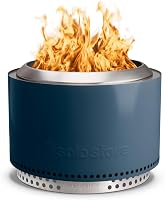
Why Is My Solo Stove Smoking?
Your Solo Stove is usually smoking because of damp wood, a cool fire, blocked airflow, or too much fuel. Start with dry kindling, leave gaps between splits, and keep fuel below the upper air holes.
On this page (10 sections)
- Why is my Solo Stove smoking?
- Does smoke during startup mean something is wrong?
- Can damp or oversized wood cause smoke?
- Could blocked vents or ash be reducing airflow?
- Is the fire too small or overloaded?
- Can wind make smoke blow toward you?
- How can I reduce smoke from my Solo Stove?
- Which Solo Stove size fits your fire?
- When should I stop using the fire pit?
- What should I check first when my Solo Stove smokes?
Your Solo Stove is usually smoking because of damp wood, a cool fire, blocked airflow, or too much fuel. Fix those conditions before buying another pit, since changing sizes won't make wet wood burn cleanly.
Solo Stove's double walls draw air through lower vents, heat it, and release it above the fire. Solo Stove says this secondary burn reduces smoke, but a wood fire can still smoke during startup, refueling, and burnout.
Why is my Solo Stove smoking?
Incomplete burning is the main cause of smoke. The useful clue is when it happens: at lighting, after adding wood, throughout the fire, or as the flames fade.
| When smoke appears | Likely cause | First response |
|---|---|---|
| At lighting | Cold fuel and a cool fire pit | Build a loose kindling fire |
| After adding a log | Damp wood, a thick split, or a crowded chamber | Pause refueling and let flames recover |
| Throughout the fire | Poor fuel or restricted airflow | Review wood condition; inspect vents once cold |
| Near the end | Smoldering fuel without steady flames | Follow the shutdown instructions |
Wind changes where smoke travels, so smoke reaching one chair doesn't always mean the fire has worsened. For the airflow explanation, read how a smokeless fire pit works.
Why is my Solo Stove still smoking after startup?
Persistent smoke needs a fuel and airflow check, rather than repeated additions of wood. A growing pile of logs can hide weak flames and make the problem worse.
Look for pieces packed tightly together, wood above the upper air holes, or a log that hisses as it heats. Hissing suggests moisture, though quiet wood isn't proof that it's dry.
For a lighting routine, see how to light and use a Solo Stove. Our guide to the best wood for a smokeless fire pit explains fuel choice in more detail.
Does smoke during startup mean something is wrong?
Some startup smoke is normal while the flame grows and heats the chamber. Don't judge the fire by its first few moments or expect the secondary burn immediately.
Begin with dry tinder, loose kindling, and a few thin splits. Leave open paths for air instead of filling the chamber with large logs before lighting.
Add larger pieces after the small fuel is burning steadily. Avoid setting a fixed deadline for a clear fire, since wood condition, weather, and the fuel stack affect how quickly it heats.
If the kindling burns away while the logs barely catch, use smaller splits for the next start. Extra paper or repeated piles of tinder won't solve damp firewood.
Can damp or oversized wood cause smoke?
Damp wood and thick logs can keep a fire cool and smoky. Moisture uses heat as it evaporates, while a large piece takes longer to catch than a thin split.
Use dry, split firewood rather than freshly cut or rain-soaked pieces. A firewood moisture meter can help: split a piece again and measure the newly exposed inner face, following the meter's instructions.
Store wood off the ground with rain protection over the top and room for air around the sides. Wrapping a damp stack tightly can trap moisture.
Choose lengths that sit fully inside the chamber, below the upper air holes. Logs leaning across the rim leave burning wood outside the area where heated air helps burn smoke.
Burn only fuel approved for your model. Painted or treated wood, trash, and yard waste don't belong in the fire pit.
Could blocked vents or ash be reducing airflow?
Ash and debris can restrict the air that feeds the fire. Check the base, lower openings, and surrounding surface only after the pit and ashes are completely cold.
Remove loose ash according to your model's care instructions, then return the base plate and ash pan to their correct positions. Keep leaves, stored items, and other obstructions away from the lower vents.
Don't wrap the base to block wind or build an enclosure around the air openings. Place the pit on a stable, suitable surface and follow its required clearances.
After cleaning, keep the cooled pit protected from rain and clear out leaves before the next use. Never cover or pack away a warm fire pit.
Is the fire too small or overloaded?
A steady flame with room between pieces works better than either a weak smolder or a packed chamber. Add fuel in stages instead of using more wood as the first response to smoke.
If the chamber is crowded, pause refueling and let the load burn down. Don't reach inside or try to rearrange hot components.
The Solo Stove Ranger 2.0 suits people who carry their pit between a vehicle, campsite, and storage. At 16.5 lb, it's the lightest option here, and Solo Stove positions it for 2–4 people.
Choose the Ranger if portability matters and you're willing to prepare shorter fuel. Skip it if your usual logs won't fit or you regularly host a larger group.
A smaller chamber still needs a well-built fire, so don't pack it tightly to avoid refueling. See Solo Stove sizes explained before choosing around your wood supply.
Can wind make smoke blow toward you?
Wind can carry smoke toward a chair even when the fire is burning steadily. Move seating when safe, keeping the required clearance from the pit.
Never move a burning or hot fire pit to chase a better wind direction. Stop adding fuel if gusts carry embers or make conditions unsafe, and follow local restrictions.
The Solo Stove Bonfire with Stand suits people who want one pit for backyard use and occasional trips. It weighs 21.7 lb, and Solo Stove positions it for 4–6 people.
Choose the Bonfire for that middle ground between carrying ease and gathering size. Skip it if frequent carrying is your main concern or your regular group needs the larger Yukon.
The included stand doesn't remove the need to check surface suitability and clearances. Read the Solo Stove Bonfire review for more buying guidance.
How can I reduce smoke from my Solo Stove?
Prepare the fuel and airflow before lighting, then manage the fire with small additions. That gives you fewer problems to correct beside a hot pit.
Use this sequence:
- Check local fire restrictions and choose an open outdoor location with the required clearances.
- Once the pit is completely cold, remove excess ash and check the air openings.
- Refit the removable parts and position the fire ring as your model's instructions show.
- Light dry tinder and kindling with thin splits arranged loosely above them.
- Add larger pieces gradually once the flame is steady.
- Pause after refueling so you can see how the new wood catches.
Don't use gasoline or other unapproved accelerants to force a smoky fire hotter. Keep children and pets away, and never leave the fire unattended.
Reduced visible smoke doesn't make combustion fumes safe to breathe. Use the pit outdoors, away from enclosed or partly enclosed spaces.
Which Solo Stove size fits your fire?
Choose for your normal gathering, carrying needs, and fuel supply, rather than buying the largest chamber available. All 3 models here burn wood and include a stand, removable base plate, and ash pan.
Their stainless steel construction and cleanup parts don't change the need for dry fuel. The Yukon and Bonfire versions here also have a high-heat ceramic coating.
Choose the Yukon for a regular backyard gathering of 6 or more, the group size Solo Stove recommends. Skip it if you mostly sit outside as a couple or need an easy carry for frequent trips.
A larger chamber asks you to build an appropriately sized fire, so it isn't a shortcut to less smoke with a tiny fuel load. Review how Solo Stove models compare before committing to a size.
If you want to compare fuel types before buying, start with fire pits for home. Decide whether storing wood, tending flames, and clearing ash fit your routine.
When should I stop using the fire pit?
Stop adding fuel if heavy smoke persists, flames won't stabilize, or wind makes the fire unsafe. Follow your model's shutdown instructions and keep watching until the fire is fully out.
Don't pour water into a hot pit unless its instructions permit that method. Plan enough time for the fire to finish safely rather than lighting it just before you need to leave.
Once everything is cold, inspect the vents and removable parts before another fire. If a part is damaged or won't fit correctly, contact Solo Stove before using it again.
Read fire pit safety basics for placement, fuel, and local-rule checks.
What should I check first when my Solo Stove smokes?
Keep your current pit if fuel or setup explains the smoke. Choose the Ranger for frequent carrying, the Bonfire for mixed backyard and travel use, or the Yukon for larger regular gatherings.
When deciding why your Solo Stove is smoking, use the timing of the smoke to choose your next step. Smoke after every fresh log points you toward fuel and loading; smoke throughout calls for a cold-pit airflow check too.
Prepare one fire with dry splits and a loose stack before deciding you need different equipment. Follow the Solo Stove use guide for your next start.
Frequently asked questions
Why is my Solo Stove smoking so much?
Heavy smoke usually points to damp wood, restricted airflow, or a fire that is too cool. An overloaded chamber can also smother the flames.
Check when the smoke starts, avoid adding more fuel to a crowded fire, and inspect the base and vents only after everything has cooled completely.
Should a Solo Stove smoke when you first light it?
Some startup smoke is normal because the wood and fire pit need to heat up before the secondary burn develops. Start with dry kindling and small splits, leaving gaps for air.
Judge the fire once it is burning steadily, rather than expecting clear air from the first flame.
Can wet wood make a Solo Stove smoke?
Yes, damp wood uses heat to drive off moisture, which can leave the fire cooler and smokier. Use dry split firewood and store it off the ground with protection from rain and open sides for airflow.
A dry outer surface alone does not prove the center is ready to burn.
How do I reduce smoke from a Solo Stove?
Use dry wood, clear airflow paths, and a loose fuel stack below the upper air holes. Build heat with kindling before adding larger splits, then feed the fire gradually.
Clean ash only when the pit is fully cold, and remember that even a well-run wood fire can produce some smoke.