Solo Stove Bonfire vs Yukon: Which Size Fits? (October 2026)
For Solo Stove Bonfire vs Yukon, choose the Bonfire for smaller gatherings and regular moves, or the Yukon for larger groups and a roomy backyard. Both bundles include the same types of accessories, so choose by space, seating and carrying needs.
On this page (10 sections)
- Solo Stove Bonfire vs Yukon: which size fits your space?
- Which one is easier to carry and store?
- Which fire pit suits your usual group?
- Do the bundle accessories change the decision?
- How should you set up and light either model?
- How do smoke and fuel needs compare?
- How do you clean and protect them between fires?
- Which buying mistakes matter most?
- How do the two bundles compare overall?
- Which Solo Stove should you choose?
Choose the Bonfire for smaller gatherings and regular moves, or the Yukon for larger backyard groups. The useful question in Solo Stove Bonfire vs Yukon is which size fits your normal evenings, storage space and carrying route.
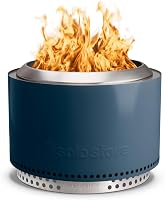
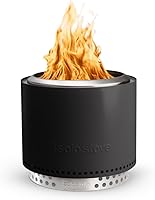
Both are wood-burning fire pits made from 304 stainless steel, with similar airflow systems and the same types of bundle accessories. Buying the larger one makes sense only when you'll use the extra size.
Start with your usual gathering, then check the space around it. For a broader look at the range, see Ranger, Bonfire and Yukon size differences.

Solo Stove Bonfire vs Yukon: which size fits your space?
The Bonfire needs less room, while the Yukon suits a more open gathering area. Measure the whole seating arrangement before choosing either one.
The Bonfire has a 19.5-inch diameter, compared with the Yukon's 27-inch diameter. Their overall dimensions are 22 x 22 x 17 inches and 28 x 28 x 19 inches, respectively.
Use the overall measurements for storage planning, rather than treating the named diameter as the full footprint. Neither measurement includes the clear space needed around an operating fire.
Mark the pit's outline on the ground, then arrange your actual chairs around it. Leave walking routes that don't force anyone to step between a chair and the fire.
Check overhead space as well as ground space. A spot that fits the body can still be unsuitable because of branches, an awning or nearby structures.
Bonfire vs Yukon: which Solo Stove fits a small patio?
The Bonfire is the better starting point for a small patio, provided the complete setup meets the manual's requirements. A smaller body doesn't make a crowded location safe.
Try the layout with chairs pulled back as people would leave them when standing up. Include side tables and the route to your door, rather than measuring an empty patio.
Skip the Yukon if it leaves you moving furniture every time someone needs to pass. Choose neither if the required clearances would extend beyond the usable area.
Read our guide to fire pit safety, spacing and local rules before settling on a location. Our guide to propane fire pits on wood decks addresses a different fuel type, so use the wood-burning model's instructions for these pits.
Which one is easier to carry and store?
The Bonfire is the more practical choice for regular moves because its body is smaller. It weighs 34 pounds, so it still needs a carrying route you can manage comfortably.
Solo Stove gives conflicting Yukon weight figures: just over 43 pounds and 26.76 kg, about 59 pounds. Confirm its weight with Solo Stove before buying if carrying is central to your plans.
Width matters even when the weight is manageable. Check doorways, gates, stairs and the turn between your storage area and the yard.
For car trips, measure the cargo opening as well as the space inside. A pit that fits in the trunk may still be awkward to load through a narrow opening.
Think through the return trip, too. You'll need time for complete cooling, room for the accessories and a plan to keep leftover ash from spreading through your vehicle.
When does moving the Yukon make sense?
The Yukon makes more sense for occasional moves than frequent loading. A roomy backyard with nearby storage is a better match than a route through stairs and tight doorways.
If you expect to move the pit after every evening, make convenience part of the buying decision. A larger fire pit becomes less useful if getting it out feels like a job.
Move either model only when fully cold, and follow its handling instructions. Don't plan on shifting a burning pit because the wind changes or guests arrive.
Which fire pit suits your usual group?
The Bonfire suits 4–6 people, while Solo Stove sizes the Yukon for 6 or more. Choose around the group you host most often, rather than your largest gathering of the year.
For a couple who sometimes invite friends, the Bonfire is the stronger default. Its smaller body leaves more flexibility for chairs and other patio uses.
The Yukon fits a household that regularly hosts a larger circle and has room to leave that area available. Its size is useful when group gatherings are routine.
Group guidance doesn't promise equal warmth at every seat. Wind, chair placement, fuel and the stage of the fire all affect what people feel.
Don't move chairs closer than the required distance to squeeze in another person. If your space cannot hold the larger seating arrangement safely, a bigger pit won't solve the problem.
Who should skip each model?
Skip the Bonfire if larger gatherings are your normal use and you have ample room for the Yukon. Choosing the smaller model solely for occasional travel can work against your main reason for buying.
Skip the Yukon if most evenings involve only a few people, storage is tight or every use starts with a difficult carry. Those buyers gain more from a manageable setup than a wider fire.
Choose neither if you want instant shutoff or can't allow time for a wood fire to burn down and cool. Our guide to choosing a fire pit by fuel, size and material helps you reconsider the fuel type before buying.
Do the bundle accessories change the decision?
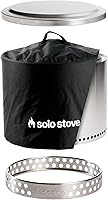
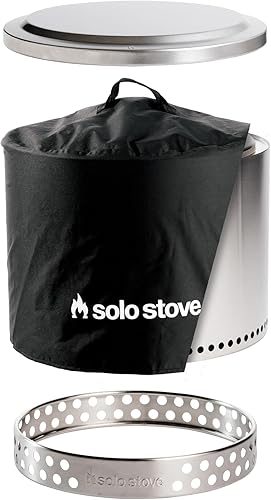
The accessories don't separate these bundles: each includes a stand, lid, weather-resistant shelter, base plate and removable ash pan. Choose the pit size first, then plan how you'll use and store the parts.
The stand raises the fire pit. It doesn't establish that a wood deck, lawn or other surface is suitable, so follow the instructions for the exact location.
Use the lid and shelter after complete cooling, according to Solo Stove's directions. Don't treat either accessory as a way to put out an active fire.
A weather-resistant cover helps between fires, but it doesn't replace a dry storage plan. Avoid trapping moisture by covering a damp pit and leaving it unattended for long periods.
Keep the accessories together in a place you can reach easily. A storage spot is less useful if reaching the pit requires emptying half a shed.
These are model-specific bundles, so don't assume a lid or shelter for one size will fit the other. Keep the parts matched to the pit they came with.
How should you set up and light either model?
Choose the location and prepare the fuel before lighting, then build a fire that leaves room for airflow. Both models need normal wood-fire care despite their low-smoke design.
Check local burn restrictions and the weather before bringing out the wood. Postpone the fire if conditions make sparks or drifting smoke difficult to manage.
Set the pit on a stable, suitable surface with its parts arranged as directed. Keep the lower air openings clear of loose items and debris.
Have dry kindling and suitable firewood ready before you start. Smaller pieces help establish the fire; add larger pieces gradually once it is burning steadily.
Leave gaps between the wood instead of packing the chamber tightly. Keep fuel below the upper air openings so the airflow system can work as intended.
Our guide to lighting and using a Solo Stove walks through the process. Follow the model's instructions rather than using extra fuel to force a slow fire along.
How should you plan the end of the evening?
Stop adding wood before you're ready to go inside, because ending a wood fire takes planning. Neither model offers the quick shutdown of a gas burner.
Keep supervising the fire as it burns down, with children and pets away from the hot body. Fading flames don't mean the metal or ash is safe to touch.
Follow Solo Stove's extinguishing instructions and keep suitable fire-control equipment nearby. Never leave a live fire unattended because the gathering has ended.
How do smoke and fuel needs compare?
Neither model has a clear smoke advantage from the supplied features. Solo Stove uses airflow and secondary combustion in both to reduce smoke once the fire is burning well.
Air enters through the lower openings, and some travels through the double wall before reaching the upper openings. That heated air helps burn particles that would otherwise escape as smoke.
Expect some smoke during startup and whenever the fire struggles. A bigger chamber doesn't remove the need for dry wood, open airflow and sensible refueling.
Choose wood you can store dry, and avoid treated, painted or glued wood. Damp fuel uses heat to drive off moisture and makes a clean burn harder to maintain.
Don't buy the Yukon on the assumption that every fire must fill its chamber. Build an appropriate fire within its instructions, and plan your wood supply around how long you want to sit outside.
For fuel guidance, read what wood works well in a smokeless fire pit. If a fire keeps smoking, work through common causes of smoke from a Solo Stove.
If smoke reduction is your main reason for buying, our guide to whether smokeless fire pits are worth it explains the trade-offs. Reduced smoke still comes with wood storage, ash disposal and a cooling period.
How do you clean and protect them between fires?
Both models use a removable base plate and ash pan, so routine cleanup follows the same basic approach. Wait until the pit and all ash are fully cold before removing anything.
Lift out the base plate, then remove and empty the pan as directed. Keep ash disposal controlled so a gust doesn't spread it across the patio.
Use a metal container for ash, and keep it away from anything that can burn. Embers can remain hidden after the surface looks cold.
Clear debris from the air openings during routine care. Covering a pit full of ash and blocked vents leaves more work before the next fire.
Follow Solo Stove's cleaning directions and let the pit dry before storage. Stainless steel still benefits from care, especially when the pit sits outdoors between uses.
The Yukon also takes more room to handle during cleanup. Make sure your storage and cleaning area lets you reach the removable parts without awkward lifting.
Which buying mistakes matter most?
The biggest mistake is choosing by fire pit diameter alone. Seating space, storage access and the work around each fire often decide which model you'll use more.
Avoid these common errors:
- Buying for rare parties. Choose for normal evenings unless large gatherings are the main purpose.
- Treating portable as effortless. Check the route and vehicle opening before committing to regular trips.
- Counting the stand as surface approval. Match the whole setup to the manual and local rules.
- Overloading the chamber. More wood can obstruct airflow and make the fire harder to manage.
- Covering too soon. Leave time for complete cooling before using the lid or shelter.
- Ignoring storage after a trip. Plan where the cold pit, accessories and remaining fuel will go.
A useful final check is to walk through a complete evening in order. Picture taking the pit out, arranging chairs, fetching wood, ending the fire and putting everything away.
If one step creates a recurring problem, address it before buying. Changing the model size won't fix an unsuitable surface or a lack of safe clearance.
How do the two bundles compare overall?
The Bonfire is the stronger all-around choice for flexible use, while the Yukon serves a more specific need for larger gatherings. Both offer similar core features, so the decision rests on how their sizes fit your routine.
| Product | Best for | Diameter | Group size | Bundle | Our score |
|---|---|---|---|---|---|
| Solo Stove Bonfire Amazon Bundle | smaller gatherings | 19.5 in | 4–6 people | Stand, lid and shelter | 8.6 |
| Solo Stove Yukon Amazon Bundle | backyard hosts | 27 in | 6+ people | Stand, lid and shelter | 7.2 |
The Bonfire's 8.6 score reflects that broader fit across smaller gatherings, storage and regular moves. The Yukon's 7.2 score reflects a narrower buyer fit and the unresolved weight detail for people planning travel.
Choose the Yukon because you regularly need its larger format. The shared accessories and cleanup design aren't reasons on their own to move up a size.
Which Solo Stove should you choose?
For Solo Stove Bonfire vs Yukon, pick the Bonfire if it fits most of your evenings and the Yukon only when larger gatherings justify the extra space. Make safe placement the first requirement, then weigh carrying and storage.
If both fit, let frequency decide: regular trips favor the Bonfire, while regular larger backyard gatherings favor the Yukon. If neither fits with the required clearances, choose a different setup.
Use our Solo Stove size comparison if you're still deciding where these models fit in the range. If the smaller option matches your plans, the Solo Stove Bonfire review is the next useful read.
Frequently asked questions
Is the Bonfire or Yukon better for a small patio?
The Bonfire is the better starting point for a small patio because its body is smaller. Measure its full dimensions, then add seating, walking routes and the clearances required by its manual; if that complete setup doesn't fit, neither model is suitable for the space.
How much heavier is the Yukon than the Bonfire?
The exact difference needs confirmation because the Yukon has conflicting weight figures: just over 43 pounds and 26.76 kg, about 59 pounds; the Bonfire weighs 34 pounds. Ask Solo Stove to confirm the weight of the Yukon bundle before buying it for regular trips or carrying up stairs.
Do the Bonfire and Yukon bundles include a stand and lid?
Yes, both bundles include a stand, lid, shelter, base plate and removable ash pan; the stand raises the fire pit but doesn't make every surface suitable. Use the lid and shelter only after the pit has fully cooled, following Solo Stove's instructions for each accessory.
Which Solo Stove size is better for a group?
The Yukon is the better fit for regular larger gatherings, with a suggested group size of 6 or more people; the Bonfire is sized for 4–6 people. Use those figures as a starting point, then check whether chairs and required fire clearances fit your actual outdoor area.
Will either fire pit produce no smoke?
Neither should be treated as smoke-free; Solo Stove's airflow design supports secondary combustion to reduce smoke once a fire is burning well, but wood condition, airflow and fire management still matter. Expect some smoke during startup or a struggling burn, and keep wood below the upper air openings.