Fire Pit Safety Basics: Fuel, Space and Local Rules
Fire pit safety starts with checking local rules, choosing an approved outdoor location and using the right fuel. Keep suitable extinguishing equipment nearby, supervise the fire and stay until flames are out and wood embers are cold.
On this page (10 sections)
- What are the basic fire pit safety rules?
- How do fuel and fire pit type change the safety steps?
- Where should you place a fire pit?
- What should you keep nearby while a fire is burning?
- How do you handle a wood fire safely?
- How do you handle a propane fire safely?
- What local fire pit rules should you check?
- Which common mistakes should you avoid?
- How do you put out a fire pit completely?
- What should you buy for better fire pit safety?
Fire pit safety starts with an allowed location, the right fuel and an adult who stays with the fire. Accessories can help with sparks, hot tools and small emergencies, but they can't make an unsuitable setup safe.
Read your fire pit's instructions before choosing a spot or buying extra gear. Our guide to fire pits for home compares wood and propane options, which need different fuel handling and shutdown routines.
What are the basic fire pit safety rules?
The basic rules are to check current restrictions, meet every clearance, control the fuel and finish the shutdown before leaving. Make these checks part of every fire, even if you used the same spot last weekend.
Before lighting:
- Confirm that your fuel and fire pit type are allowed today.
- Check the required clearances around and above the pit.
- Set the pit on a level, stable surface approved for that model.
- Clear away leaves, loose paper, cushions and other things that can burn.
- Put suitable extinguishing equipment within reach.
- Assign one adult to watch the fire and complete the shutdown.
Keep children and pets outside the hot area, with a physical boundary or close adult supervision as needed. Chairs should leave room for people to stand and walk without stepping toward the pit.
Don't move a lit fire pit to chase shade or avoid smoke. Choose its position before lighting, and leave it there until it has cooled enough to move under the manufacturer's instructions.
How do fuel and fire pit type change the safety steps?
Choose the fuel whose setup and shutdown you can manage in your space. Wood needs ember control and ash disposal; propane needs sound gas connections, proper tank placement and a clear shutoff routine.
A wood fire suits someone who can store dry fuel, tend the burn and stay through the cooling period. Skip wood if local restrictions rule it out or you regularly need to leave soon after the gathering ends.
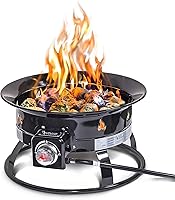
Propane suits someone who prefers a controlled fuel supply and no wood ash to clear. It still needs outdoor clearances, supervision and a suitable place for the cylinder and hose.
Neither fuel makes a cramped or enclosed space suitable. Outdoor fire pits don't belong in garages, tents or other enclosed areas where combustion gases can collect.
For more on the differences, read our propane versus wood fire pit guide. If you use a gas model, our propane fire pit instructions cover lighting and shutdown.
When choosing a new pit, check its footprint, fuel needs and installation requirements before comparing extras. Our guide to choosing a fire pit helps narrow those choices.
Where should you place a fire pit?
Place the pit in an open outdoor area that meets both its instructions and local rules. Check the whole fire area, including the surface underneath, overhead hazards and the route people will use to reach their seats.
There is no universal clearance for every model. Follow the stricter requirement if the manual and local rules give different minimum distances.
Keep buildings, fences, furniture, branches and roof edges outside those clearances. Don't assume that stone facing makes an entire wall or nearby structure noncombustible.
Check the ground for rocking legs, slopes or soft spots before loading fuel. Keep the pit away from walkways where someone could trip into it or catch a foot on a propane hose.
Wind can carry embers beyond the cleared area and push flames toward nearby objects. Skip the fire when conditions make it hard to keep flames, sparks or smoke away from people and property.
Does a mat improve fire pit safety on a deck?
A mat can add surface protection from stray embers, but it doesn't approve a deck for fire pit use. The fire pit's instructions must allow the surface and specify any required stand, air gap or other protection.
Our guide to fire pits on wood decks explains why the surface and model instructions matter.
The Rumlick suits buyers who already have an approved setup and want a foldable layer for stray debris. Skip it as a solution for missing clearances, direct flame contact or an unapproved combustible surface.
Measure the protection area around the pit's footprint, rather than checking only whether its feet fit. A mat that barely extends beyond the base leaves little surrounding surface covered.
Rumlick instructs you to keep fire sources from direct contact with the mat. Let it cool before cleaning it with a wet rag or hose, then let it dry before folding it for storage.
What should you keep nearby while a fire is burning?
Keep suitable extinguishing equipment, a fuel-handling tool and a clear exit route nearby. Put them where you can reach them without leaning over the fire or crossing a hose.
Choose equipment for the fuel and hazards in your setup. A wood-fire shutdown method is not a substitute for the emergency instructions supplied with a propane appliance.
Who should choose the Kidde extinguisher?
The Kidde Basic 110 suits buyers who want a compact residential extinguisher for small, contained fires involving ordinary combustibles, flammable liquids or electrical equipment. Its classification is 1-A:10-B:C, and it is a single-use model.
Use the bracket in a location that meets Kidde's storage instructions and stays accessible from the seating area. Don't leave it beside the pit where a spreading fire could block access.
Read the operating label before an emergency, and check that the gauge points to the charged range. Replace it after any discharge, even if some agent remains, and follow Kidde's replacement guidance.
Skip this model if you need a rechargeable unit or a different capacity required for your setting. Don't treat a compact extinguisher as a reason to fight a spreading fire.
Only attempt to extinguish a small, contained fire when you have a clear escape route and can act safely. If flames spread, smoke blocks your view or you are unsure, get people away and call emergency services.
Who should choose the RGJ spark screen?
The RGJ screen suits owners of compatible round wood-burning pits who want help reducing flying sparks and debris. Its stainless steel mesh has 12 support rods, and the screen separates into 4 pieces for storage.
Measure your pit's inside opening and check how the screen will rest on its rim before ordering. Shape and seating matter as much as the named diameter.
Skip it if your pit requires a different screen size, shape or attachment method. It isn't a weather cover, and it doesn't turn a wood pit into an appliance suitable for use during a burn ban.
Assemble the screw connections before use and check that the screen sits securely without rocking. Have a noncombustible place ready for the hot screen when you lift it to add wood.
Use the lifting tool as directed, keeping your face away from the opening. Never assume the ring is cool because it sits above the mesh.
Who should choose the RAPICCA gloves?
The RAPICCA gloves suit adults who want hand and forearm coverage while using suitable fire tools. Their reinforced leather construction is useful for tending tasks that put arms near heat or sparks.
RAPICCA gives a heat-resistance claim of up to 932°F for short contact. That is not a safe holding time for any particular hot object, and it doesn't make grabbing burning logs or coals safe.
Skip them if you need waterproof gloves or gloves for prolonged contact with hot metal. Choose tools that keep your hands farther from the heat instead of relying on thicker protection alone.
Check that you can grip and release the poker securely while wearing them. Inspect the seams and leather before use, keep the gloves dry, and stop handling an object as soon as heat reaches your hand.
How do you handle a wood fire safely?
For a wood fire, start with a small load of suitable dry fuel and add pieces gradually. Keep the fire within the pit's limits and leave enough time for a complete shutdown.
Use wood intended for the appliance. Don't burn trash, painted or treated lumber, or materials the manufacturer excludes.
Store spare wood away from the fire area, and bring over only what you plan to add. Wet fuel can make smoke harder to manage; our guide to wood for smokeless fire pits explains fuel choices for those models.
Use the approved lighting method. Never pour gasoline, alcohol or another unapproved liquid onto a fire or warm embers.
Place logs with a suitable tool so they stay inside the burn chamber. Avoid pieces that hang over the rim or prevent a compatible screen from seating properly.
Don't keep adding fuel when smoke is blowing toward guests or buildings. Reduce the gathering's exposure and follow the pit's shutdown instructions if conditions no longer suit a fire.
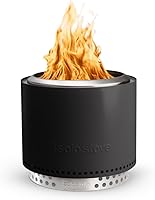
Smokeless designs still produce flame, heat and hot embers. Their airflow system doesn't remove the need for clearances or careful ash handling.
How do you handle a propane fire safely?
For propane, inspect the gas setup before lighting and follow the exact ignition and shutoff sequence. Keep the supply controls accessible throughout use.
Check the hose, regulator and connections as the manual directs. Don't use damaged parts, modify fittings or substitute components that the manufacturer hasn't approved.
Route the hose away from heat, sharp edges and foot traffic. Keep the cylinder upright and in the location required by the appliance instructions.
Check for leaks using the manufacturer's approved method, never a flame. If ignition fails, stop and follow the manual's waiting and relighting steps rather than repeatedly trying to light escaping gas.
If you smell gas or hear hissing that suggests a leak, don't light the pit. Shut off the supply only if you can do so safely, move away and avoid ignition sources or electrical switches.
Contact your gas supplier or emergency services from a safe location. Don't use the pit again until the cause has been resolved.
Keep burner openings and required ventilation clear. Use only the fire media approved for the appliance, and don't add wood to a propane burner.
Read our guide to lighting and using a propane fire pit for a step-by-step overview.
What local fire pit rules should you check?
Check current information from your local fire authority before each use. A previous approval doesn't override a new burn restriction or a change in weather conditions.
Look for guidance on:
- Recreational fires and permitted appliance types.
- Burn bans and fuel-specific exceptions.
- Clearances from structures and property lines.
- Fire size, allowed fuels and operating hours.
- Permits or other local requirements.
For an apartment, condo or rental, check the property's rules too. Permission to use a shared patio doesn't automatically include permission for an open flame.
Don't assume a propane exemption applies to every gas appliance or location. If the wording doesn't clearly cover your setup, wait and ask the authority responsible for the restriction.
Which common mistakes should you avoid?
The most serious mistakes are using accessories to excuse a poor location, adding too much fuel and leaving before shutdown is complete. Prevent those problems before buying extra equipment.
A screen doesn't replace clear space, and a mat doesn't cancel the pit's surface requirements. Gloves also don't make it safe to reach into flames.
Avoid arranging chairs so tightly that guests must step over tools or squeeze past the hot pit. Keep bags, blankets and spare cushions out of the walking route.
Assign supervision clearly when several adults are present. “Someone is watching” can leave a fire unattended when everyone assumes another person has taken over.
Don't put a weather cover over a warm pit or pack hot tools into a storage bag. Cooling takes time even after the flame has gone out.
How do you put out a fire pit completely?
Put out the fire using the instructions for its fuel and model, then stay until the remaining heat is safe under those instructions. No visible flame does not mean a wood fire is out.
Stop adding wood well before you want to leave. Don't build one last large fire if you can't remain for the full extinguishing and cooling period.
Use water only as the pit's instructions allow, since sudden cooling can damage some models. Plan the approved extinguishing method before lighting, not when the gathering ends.
Handle ash only when it is cold, and follow the manufacturer's disposal directions. Use an appropriate metal container with a fitted lid, kept on a noncombustible surface away from buildings and anything that can burn.
Never put ash in a plastic bin, paper bag or compost pile. Don't use bare hands to judge whether ash or metal is cool.
For propane, shut down the burner and fuel supply in the order specified by the manufacturer. Let the appliance cool before covering it, disconnecting components or moving it.
After either type of fire, check the surrounding area for stray embers or heat damage. Clean away residue and inspect tools before the next use.
What should you buy for better fire pit safety?
Buy equipment for the risk your approved setup actually has. Location, local permission and a workable shutdown routine come before accessories.
Choose the RGJ screen for a compatible round wood pit where escaping sparks are a concern. Choose the RAPICCA gloves for tool-based tending with added forearm coverage, while keeping direct heat contact brief.
Choose the Kidde for accessible residential fire protection when its classification and capacity meet your needs. Choose the Rumlick mat for stray-debris protection beneath an already approved arrangement.
If your yard can't meet the required clearances, skip the fire rather than buying gear to bridge the gap. If you can't stay through wood-fire shutdown, choose another plan for that evening.
Good fire pit safety means matching the fuel, space and routine before you light up. For help choosing between the main options, see our fire pit comparison.
See the RGJ 22-Inch Spark Screen and RAPICCA Fire Pit Gloves on Amazon.
Frequently asked questions
How far should a fire pit be from a house?
Use the clearances required by your fire pit's instructions and local fire rules, following whichever is stricter; there is no single distance that fits every model and yard. Check space beside and above the pit, including nearby fences, furniture, branches, roof edges and anything else that can burn.
Can I use a fire pit during a burn ban?
Don't use a fire pit during a burn ban unless the current local restriction clearly allows your fuel and appliance type; some restrictions distinguish between wood and gas, but you shouldn't assume an exception applies. Check your local fire authority's current notice and ask for clarification before lighting.
Can I leave a fire pit burning overnight?
No, never leave flames or hot embers unattended overnight; stop adding wood early enough to complete the shutdown before you leave, then follow the pit's extinguishing instructions. Embers can stay hot without glowing, so darkness or a lack of smoke is not proof that the fire is out.
Is a spark screen enough to make a fire pit safe?
No, a spark screen only helps reduce escaping sparks and debris from a compatible wood fire pit; it doesn't replace clearances, suitable fuel, supervision or extinguishing equipment. The screen also becomes hot, so use its lifting tool as directed and keep children and pets away from it.
Can I put a fire pit on a wood deck?
Use a wood deck only when your fire pit's instructions and local rules allow that setup, including any required stand or heat protection; a mat alone doesn't establish that the surface is suitable. Read our guide to fire pits on wood decks before choosing a location.