Solo Stove Sizes Explained: Ranger, Bonfire and Yukon
To compare Solo Stove models, start with group size and carrying needs: Ranger suits small groups and travel, Bonfire balances both, Basecamp 24 favors regular backyard gatherings, and Yukon suits larger groups with room for a bigger setup.
On this page (6 sections)
To compare Solo Stove models, choose Ranger for frequent carrying, Bonfire for mixed home and travel use, Basecamp 24 for regular backyard gatherings, or Yukon for larger groups. Your usual head count and storage route matter more than buying the biggest fire pit you can fit.
All four burn wood, use airflow to reduce smoke, and include a stand plus a removable ash pan and base plate. The main buying decision is how much fire pit you want to carry, store, and gather around.
How do Solo Stove models compare by size?
The size order is Ranger, Bonfire, Basecamp 24, then Yukon, from smallest to largest. Use overall dimensions when measuring your storage spot, since a model's nominal diameter may differ from its full footprint.
| Model | Overall dimensions | Suggested group | Carrying weight |
|---|---|---|---|
| Ranger | 17 x 17 x 15 in | 2–4 people | 16.5 lb |
| Bonfire | 19.49 x 19.49 x 17.52 in | 4–6 people | 21.7 lb |
| Basecamp 24 | 24.6 x 24.6 x 17.8 in | 5–7 people | 30.5 lb |
| Yukon | 29 x 29 x 18.5 in | 6 or more people | About 40–43 lb |
Solo Stove gives different weight figures for this Yukon bundle. Confirm the exact weight before ordering if it is close to your comfortable lifting limit.
The group ranges are planning guides, not seating limits or promises of equal warmth. Chairs, safe spacing, and room to walk behind seated guests all affect how well a model fits your yard.
Which Solo Stove model fits your routine?
Choose for the fires you have most often, rather than one unusually large party. A model that fits your weekly routine is easier to justify than a larger one that makes every setup harder.
For context on other fuel types and designs, start with fire pits for home. If tending logs and disposing of ash sound like chores you'll avoid, compare propane and wood fire pits before choosing a size.
Compare Solo Stove models for travel: Ranger
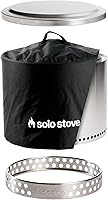
Ranger suits couples, small groups, and frequent carrying. Its compact body and included nylon carry case make it the clearest choice here when the fire pit needs to share vehicle space with camping gear.
It also makes sense for a small household that brings the pit out for each fire, then returns it to storage. Measure the storage opening and carrying route, not just the patch of patio where it will sit.
Skip Ranger if a larger circle of friends is your normal crowd. Saving space during storage won't help if you regularly wish you had chosen a bigger gathering pit.
Its smaller chamber also makes fuel fit worth planning. Choose split logs that sit inside the burn chamber, and see our portable fire pit guide if transport is your main priority.
Bonfire for one fire pit at home and away
Bonfire is the most balanced choice for buyers who want backyard use and occasional trips. It gives a family-sized gathering more room than Ranger without moving into the heavier backyard models.
Choose it if your fire pit needs to work on the patio most weekends but sometimes goes camping. The weight difference from Ranger matters less when carrying is occasional and the extra gathering space gets regular use.
Skip Bonfire if you always pack light or usually host beyond its suggested group range. In those cases, Ranger or Basecamp gives you a clearer match instead of a compromise you notice every time.
The Ash version pairs 304 stainless steel with a high-heat ceramic coating. Choose that finish for its appearance, while keeping the same focus on dry storage and careful handling.
Basecamp 24 for frequent backyard fires
Basecamp 24 suits households that gather in the yard often and want more room than Bonfire provides. Its position between Bonfire and Yukon is useful when extra guests are common but the largest model feels unnecessary.
Choose it when moving the pit means a short trip from storage to a regular outdoor spot. Its wider body and greater weight make it less appealing for frequent loading into a vehicle.
Basecamp uses stainless steel that naturally develops a golden-blue patina with heat. If you want a surface that keeps its original silver appearance, that expected color change should factor into your choice.
Skip it if you want to burn pellets. Basecamp is for firewood logs only and does not work with the Pellet Adapter.
Yukon for larger backyard gatherings
Yukon suits buyers who want the largest gathering pit here and have a practical place to keep it. Choose it for a spacious seating area where the fire pit rarely needs a long carry.
The Water version combines 304 stainless steel with a high-heat ceramic coating. Its size makes it a substantial backyard centerpiece, but you still need enough room for safe placement beyond its footprint.
Skip Yukon if every fire requires stairs, a narrow doorway, or lifting into a vehicle. A wide body can be awkward to carry even when its weight is within your lifting ability.
If you're choosing between the larger fire and easier handling, our Bonfire vs Yukon comparison focuses on that tradeoff.
How much space do you need around a Solo Stove?
You need the required fire clearances plus usable seating and walking space, not just room for the metal body. A smaller model doesn't make a balcony, covered patio, or tight corner suitable for an open wood fire.
Before buying, mark the footprint and arrange your chairs around it. Check whether people can get up and move away without stepping close to the fire.
Look overhead and around the site for branches, roofs, fences, and other combustible materials. Follow the chosen model's instructions and local fire restrictions rather than guessing from its diameter.
Each bundle includes a stand, but a stand doesn't approve every surface. Check both the fire pit instructions and your deck manufacturer's guidance, and use any additional protection they require.
Our fire pit safety guide covers fuel, placement, and local rules to check before your first fire.
How do you set up a cleaner-burning fire?
Use dry, split firewood and keep the airflow paths clear. The double-wall design feeds warmed air back over the fire to burn more smoke, but it still depends on suitable fuel and a well-built fire.
Start with a stable, level setup and assemble the components as directed. Check that the ash pan and base plate are seated correctly before adding fuel.
Build a loose stack with kindling and smaller splits, leaving gaps for air. Add larger pieces as the fire develops instead of filling the chamber with dense logs at the start.
Keep wood below the upper air holes and avoid packing it tightly against them. Oversized pieces that project above the rim can interfere with the cleaner burn you're trying to achieve.
Low smoke doesn't mean no smoke. Startup, damp wood, and a fading fire can still produce it, so don't choose a larger model expecting size alone to solve a smoky fire.
Read how to use a Solo Stove for the lighting sequence and why a Solo Stove is smoking for common fuel and airflow problems.
For help choosing suitable splits, see our guide to wood for smokeless fire pits.
What changes with cleanup and storage?
The cleanup method is similar across these models because each has a removable ash pan and base plate. The practical difference is how much room and effort you need to handle the cooled fire pit.
Plan a safe place for the pit to remain while the fire burns out and the metal cools fully. Don't buy a travel model assuming you can pack it immediately after the flames disappear.
Ash can hide hot embers, so follow the instructions for removal and disposal. Use a suitable metal container on a noncombustible surface, away from combustible materials, rather than putting warm ash in household trash.
Clear ash that could obstruct airflow, then store the pit dry. A removable pan simplifies access, but it doesn't replace routine care or make damp storage harmless.
Before choosing a larger model, picture the full job: cooling, removing ash, cleaning, and returning it to shelter. If any step requires an awkward lift, a smaller pit may serve you better.
Which Solo Stove model should you choose?
When you compare Solo Stove models, let your normal gathering and hardest carrying task settle the decision. If both point to the same model, there's little reason to size up.
- Pick Ranger when frequent transport, compact storage, and small gatherings come first.
- Pick Bonfire when you want one fire pit for family evenings and occasional trips.
- Pick Basecamp 24 when backyard fires are frequent and extra guests are part of your usual group.
- Pick Yukon when a larger gathering area justifies the bulk and you can manage storage without awkward carrying.
If you're torn between adjacent sizes, favor easier handling unless the extra group space solves a regular need. For a comparison beyond these four models, read Solo Stove vs Breeo.
Frequently asked questions
Which Solo Stove model is the largest?
Yukon is the largest model in this comparison, with a nominal 27-inch diameter and overall dimensions of 29 x 29 x 18.5 inches. It suits larger backyard gatherings, but allow space beyond the pit itself for chairs, walking routes, and the clearances required by its instructions.
Is the Solo Stove Bonfire big enough for a family?
Bonfire suits a family that usually gathers in a group of 4 to 6 people. Choose it when you want a backyard fire pit you can also take on occasional trips, and consider Basecamp 24 if extra guests are part of your normal routine.
What is the difference between Solo Stove Ranger and Bonfire?
Ranger is smaller and lighter, making it the better choice for frequent carrying and gatherings of 2 to 4 people. Bonfire offers more room for a group of 4 to 6, so it suits buyers who want one fire pit for both home use and occasional travel.
Is Basecamp 24 bigger than the Bonfire?
Yes, Basecamp 24 measures 24.6 inches across, compared with Bonfire's roughly 19.5 inches. Basecamp is the stronger fit for regular backyard gatherings of 5 to 7 people, while Bonfire is easier to justify if you often carry your fire pit between home, storage, and campsites.