Solo Stove vs Tiki Fire Pit: Which Is Better? (October 2026)
In the Solo Stove vs Tiki choice, pick TIKI for a dedicated patio spot and optional Wood Packs, or Bonfire for frequent moves and its lid-and-shelter bundle. Both suit gatherings of 4–6 people, so choose around placement, fuel and storage rather than diameter alone.
On this page (10 sections)
- Solo Stove vs Tiki: which fits your patio?
- What comes with these exact bundles?
- Which one should you buy, and who should skip it?
- Does either fire pit reduce smoke better?
- How should you set up the fire pit before the first fire?
- Which fuel routine will you prefer?
- How much cleanup and care do they need?
- Which materials and finish should guide your choice?
- What buying mistakes should you avoid?
- Solo Stove vs Tiki: make the final choice
Choose TIKI for a dedicated patio gathering spot and Solo Stove Bonfire for more frequent moves between home and camp. In this Solo Stove vs Tiki comparison, fuel choice and storage matter more than a small difference in seating claims.
Both models suit gatherings of 4–6 people, burn wood and collect ash in removable pans. TIKI adds the option of its ready-to-light Wood Packs, while this Bonfire bundle includes both a lid and a shelter.
Neither offers instant shutoff or freedom from smoke. Buy one because you enjoy tending a wood fire and have a suitable outdoor place to use it.

Solo Stove vs Tiki: which fits your patio?
The Bonfire takes up less space, while TIKI makes a wider centerpiece. Measure the whole seating area before choosing, including the room needed to walk around an active fire.
TIKI measures 24.75 inches wide and deep by 18.75 inches high. The Bonfire's fire pit diameter is 19.5 inches, with overall bundle dimensions of 22 x 22 x 17 inches.
Use the overall dimensions when planning storage or a carrying route. The fire pit diameter alone won't tell you whether the setup fits through a narrow gate or beside your patio furniture.
Both brands describe these models as suitable for 4–6 people. TIKI also claims a 4-foot heat radius, but that isn't a safety clearance or a promise that every seat will feel equally warm.
Wind, outdoor temperature and seat position affect comfort around any wood fire. Don't crowd chairs closer just to fit another person into the circle.
A useful planning step is to mark the proposed footprint on the ground, then arrange chairs around it using the manual's clearances. Check that people can stand up and leave without stepping toward the pit.
Which Solo Stove vs Tiki option is easier to move?
The Bonfire is the better travel choice at 34 pounds, compared with TIKI's 45 pounds. That 11-pound difference matters when carrying a pit from storage or loading it for a weekend away.
Weight isn't the whole lifting job. A round fire pit can be awkward on stairs or along a narrow path, so consider your route and ability to carry it safely.
For camping, leave room in the vehicle for the cooled pit, fuel and other gear. Also allow time for the fire to burn down and cool before departure.
TIKI makes more sense when you can give it a regular home near the patio. For other travel-focused options, see our guide to portable fire pits.
What comes with these exact bundles?
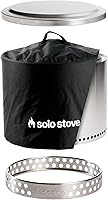
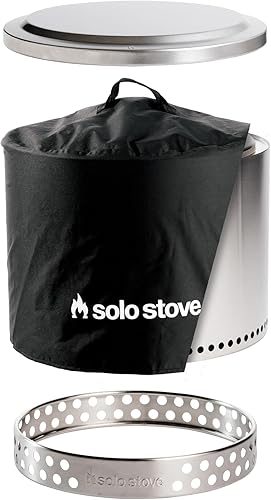
The Bonfire bundle supplies more covering options, while TIKI includes the basics for placement, ash collection and weather protection. Compare the complete packages rather than assuming every version from either brand has the same contents.
| Included item | TIKI Patio | Bonfire Amazon Bundle |
|---|---|---|
| Stand | Yes | Yes |
| Removable ash pan | Yes | Yes |
| Removable base plate | Not specified here | Yes |
| Weather protection | Cover | Shelter |
| Lid | Not included | Included |
TIKI's compatible screen and poker, heat deflector, tabletop and griddle are sold separately. Decide which activities you want before adding accessories, since a casual evening fire needs a different setup from outdoor cooking.
The Bonfire's lid covers the pit after cooling, and its shelter provides weather-resistant protection between fires. Neither piece replaces supervision while wood or embers are burning.
Don't buy the bundle with the longest accessory list by default. Extra pieces add value when you have a clear use and a place to store them.
Our TIKI Patio review gives a closer look at that model. To compare Solo Stove sizes before settling on Bonfire, see Solo Stove Bonfire, Ranger and Yukon sizes.
Which one should you buy, and who should skip it?
Buy TIKI for a regular backyard gathering spot; buy Bonfire when moving and storing the pit are part of your routine. Skip both if tending fuel and waiting for cold ashes would make you use the fire less often.
TIKI suits a settled patio setup
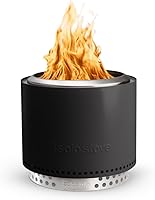
TIKI fits a household that keeps its outdoor seating arranged around a fire pit. Its darker finish and wider body suit buyers who want the fire to be a visible part of that space.
It's also the clearer choice if TIKI Wood Packs appeal to you. You can choose those or natural cut firewood without relying on uncertain cross-brand fuel compatibility.
Skip TIKI if every evening starts with carrying the pit down steps or across the yard. Its extra weight becomes a recurring task, even if you like its appearance.
Bonfire suits changing locations
Bonfire fits buyers who use the yard one week and a permitted campsite the next. Its smaller overall dimensions also make it the first of these two to consider when storage is tight.
The included lid and shelter suit buyers who want those pieces together from the start. They still need somewhere to go while the fire is burning.
Skip Bonfire if your main reason for choosing it is an expectation of a smoke-free fire. Its airflow design reduces smoke under suitable conditions, but fuel and fire management still matter.
Neither suits push-button evenings
Choose another fuel type if you want quick starts and a predictable finish before bed. Wood fires require attention after the last log, so a short gathering can still involve a long cooling period.
Our guide to propane versus wood fire pits explains that choice. If you're still deciding on the basic setup, start with how to choose a fire pit.
Does either fire pit reduce smoke better?
Choose on fit and fuel rather than a claimed smoke winner. Both use airflow to reduce smoke, and their designs alone don't establish which produces less in the same conditions.
TIKI says its internal airflow helps reduce smoke and ash. Solo Stove describes secondary combustion, where heated air feeds a second burn above the main fire once it's hot.
For either design, dry wood and clear air passages help combustion. Damp fuel spends energy shedding moisture, while crowded logs can restrict the air needed for a clean burn.
Expect smoke during lighting and when a fire struggles. Adding several large logs at once can cool or crowd an established fire, so feed it steadily instead.
Don't place everyone directly downwind and expect the pit to solve the seating problem. Shift chairs when needed, and postpone the fire if gusts make sparks or smoke hard to manage.
Read how a smokeless fire pit works for the airflow basics. Fuel choice gets more detail in our guide to wood for a smokeless fire pit.
How should you set up the fire pit before the first fire?
Start with a permitted outdoor location that meets the manual's surface and clearance rules. An included stand doesn't make every deck, patio or campsite suitable.
Check local burning restrictions and any campsite rules before gathering fuel. A pit that fits physically may still be unsuitable under a roof, beside a fence or where smoke reaches neighboring windows.
Choose a stable, level location and keep the path around it clear. Place stored wood, spare chairs and the removed cover away from heat and drifting sparks.
Read the assembly and operating steps before lighting. Confirm that ash components are seated correctly and air openings are clear rather than trying to adjust parts around a hot fire.
Keep suitable extinguishing equipment accessible and know the manual's shutdown procedure. Children and pets need a boundary that keeps them away from the hot body as well as the flames.
Our fire pit safety basics covers the placement checks. For a more detailed lighting routine, see how to use a Solo Stove.
Which fuel routine will you prefer?
TIKI offers the choice of firewood or TIKI Wood Packs; Bonfire is the straightforward firewood choice here. Pick around the fuel you'll store and use regularly, rather than an occasional idea.
Wood Packs may appeal if you prefer a ready-to-light option for planned patio evenings. Follow TIKI's directions for using them, and don't assume the packs are suitable for Bonfire.
Firewood suits buyers who enjoy building and feeding a fire. Keep it dry, choose pieces that fit within the pit's recommended loading limits, and leave room for air between them.
Start with a manageable fire rather than filling the chamber immediately. Add fuel as it catches, and keep logs within the limits described in the manual.
Avoid treated lumber, painted scraps and household trash. Don't use liquid accelerants to rescue a weak fire; improve the fuel arrangement and follow the approved lighting method.
Plan the last fuel addition around when you want the evening to end. Adding another large log just before leaving creates a shutdown problem that neither brand's cover can solve.
How much cleanup and care do they need?
Both need cold-ash removal and dry storage between fires. Their removable pans make collection simpler, but they don't remove the need to wait until everything has cooled.
TIKI's pan comes out for emptying. On Bonfire, you lift the removable base plate to reach the pan underneath.
Allow time for hidden embers to cool, even after flames disappear. Put ashes in a suitable metal container with a lid, away from combustible material, and follow local disposal guidance.
Check the air passages as part of cleanup. Leaving ash to build up can obstruct airflow and make the next fire harder to manage.
Fit the cover or shelter only after the pit is completely cool. Let damp components dry before covering them so you don't trap moisture during storage.
Before a trip, remove cold ash and secure loose pieces for transport. Packing a dirty pit beside camping gear creates avoidable mess, especially when the vehicle ride shifts its contents.
Which materials and finish should guide your choice?
Choose the finish you prefer, then commit to caring for it. TIKI uses black powder-coated 16-gauge stainless steel, while Bonfire uses silver 304 stainless steel.
The black TIKI may blend with dark patio furniture, while Bonfire gives you a visible metal finish. Those are useful style differences, but they don't establish a durability winner.
Don't drag either pit across rough ground or use its surface as a storage shelf for tools. Follow the brand's cleaning directions rather than choosing abrasive cleaners that could damage the finish.
Weather-resistant protection helps between uses, but it doesn't replace care. If your storage area stays damp or collects standing water, solve that problem before leaving either pit there.
What buying mistakes should you avoid?
Avoid choosing by diameter, accessory count or the word “smokeless” alone. The better purchase is the one that fits your whole evening, including carrying, fueling and cleanup.
- Treating seating claims as clearances. A gathering size describes intended use, not the space needed around heat and sparks.
- Assuming the wider pit heats every seat better. Neither body size nor TIKI's heat-radius claim settles that comparison.
- Expecting a stand to approve deck use. The manual, surface requirements and local rules still control placement.
- Buying accessories before deciding how you'll use the fire. Separate useful equipment from pieces that will sit in storage.
- Planning to leave immediately after the flames drop. Cooling time belongs in the schedule for both backyard evenings and camping trips.
- Expecting a lid to end the fire. Use the Bonfire lid after cooling, as directed, rather than treating it as a shutdown shortcut.
Before ordering, choose the storage spot as carefully as the burn location. A pit that's awkward to put away can turn a pleasant evening into a task you start avoiding.
Solo Stove vs Tiki: make the final choice
Pick TIKI if your fire pit will stay near a regular patio seating area and you want Wood Pack flexibility. Pick Bonfire if frequent moves, tighter storage and the included lid-and-shelter package match your routine.
For the final Solo Stove vs Tiki decision, walk through one full evening: retrieve the pit, place it safely, light it, feed it, let it cool and put it away. Choose the model that makes that routine practical.
If neither fits, change the size or fuel plan before buying accessories. For another brand comparison, read Solo Stove vs Breeo, or compare Bonfire and Yukon sizes if a larger Solo Stove is your next option.
Frequently asked questions
Is Solo Stove or TIKI better for a small patio?
The Bonfire is the better starting point for a small patio because its overall dimensions are smaller. That doesn't make it suitable for every tight space: required clearances, overhead space and room for chairs still decide whether it fits.
Choose neither if you can't meet the manual's placement rules.
Do Solo Stove and TIKI fire pits use the same fuel?
Both burn firewood, while the TIKI also accepts TIKI Wood Packs as a ready-to-light option. Don't assume those packs are suitable for the Bonfire.
Follow each brand's fuel instructions, use dry wood, and avoid treated lumber or household trash in either fire pit.
Which fire pit includes a cover?
Both include weather protection: TIKI comes with a weather-resistant cover, while this Bonfire bundle includes a weather-resistant shelter and a lid. Let the fire pit cool completely before fitting any of these pieces.
The Bonfire lid is for covering the cooled pit, not a reason to leave a fire unattended.
Are Solo Stove and TIKI smokeless fire pits?
Both are designed to reduce smoke, but neither eliminates it under every condition. Solo Stove's secondary combustion depends on a hot fire, and TIKI uses internal airflow to reduce smoke and ash.
Dry fuel, clear air passages and sensible loading help either design work as intended.
Which fire pit is easier to move?
The Bonfire is the easier choice for frequent moves because it's 11 pounds lighter than the TIKI. Still, plan for lifting, a clear carrying route and vehicle space before buying.
Move either pit only after it has cooled completely, and remove cold ash before packing it for travel.